Military commander who fought for the Spanish Netherlands during the Eighty Years’ War and for the Holy Roman Empire during the Thirty Years’ War
Size 7 x 11 cms
Price £14.00
Ref:2713


Military commander who fought for the Spanish Netherlands during the Eighty Years’ War and for the Holy Roman Empire during the Thirty Years’ War
Size 7 x 11 cms
Price £14.00
Ref:2713
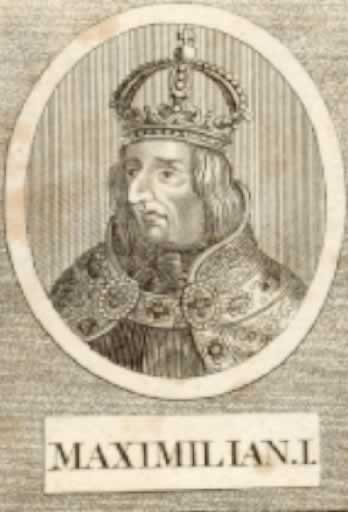
Maximilian I (22 March 1459 – 12 January 1519) was King of the Romans from 1486 and Holy Roman Emperor from 1508 until his death in 1519. He was never crowned by the Pope, as the journey to Rome was blocked by the Venetians. He proclaimed himself elected emperor in 1508 at Trent, with Pope Julius II later recognizing him.[3][4][5] This broke the tradition of requiring a papal coronation for the adoption of the Imperial title. Maximilian was the only surviving son of Frederick III, Holy Roman Emperor, and Eleanor of Portugal. From his coronation as King of the Romans in 1486, he ran a double government, or Doppelregierung with his father until Frederick’s death in 1493.
Date:1493
Size 4.5 x 7 cms
Price £14.00
Ref:2769

Charles VI was Holy Roman Emperor and ruler of the Austrian Habsburg monarchy from 1711 until his death, succeeding his elder brother, Joseph I. He unsuccessfully claimed the throne of Spain following the death of his relative, Charles II
Size 11 x 15 cms
Price £28.00
Ref:2616
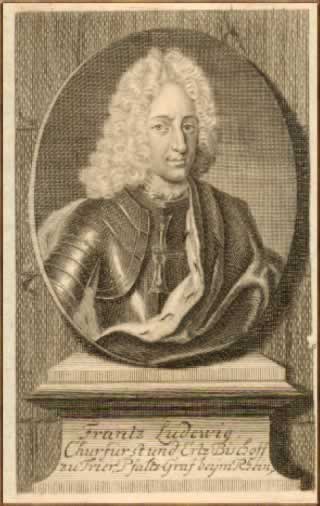
Francis Louis of Palatinate-Neuburg was bishop and archbishop of several dioceses, prince-elector of the Holy Roman Empire, and Hochmeister of the Teutonic Order.
Date:
Size 9 x 14 cms
Price £14.00
Ref:1497
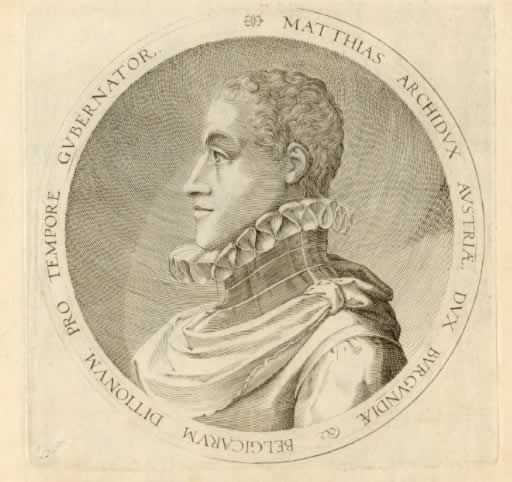
Matthias was Holy Roman Emperor from 1612 to 1619, Archduke of Austria from 1608 to 1619, King of Hungary and Croatia from 1608 to 1618 and King of Bohemia from 1611 to 1617. His personal motto was Concordia lumine maior.
Date:1612
Size 19 x 19 cms
Price £28.00
Ref:2632

Maximilian III Joseph (28 March 1727 – 30 December 1777), also known by his epithet “the much beloved” was a Prince-elector of the Holy Roman Empire and Duke of Bavaria from 1745 to 1777. He was the last of the Bavarian branch of the House of Wittelsbach and because of his death, the War of Bavarian Succession broke out.
Artist: Auloe
Date:1727
Size 11 x 16 cms
Price £14.00
Ref:1701
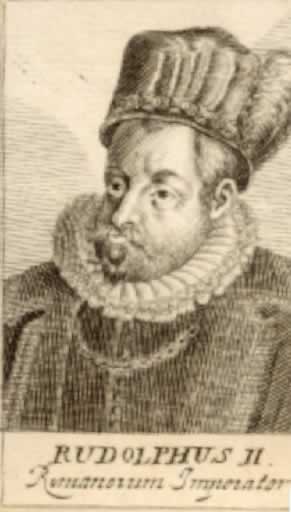
Rudolf II was Holy Roman Emperor, King of Hungary and Croatia, King of Bohemia and Archduke of Austria. He was a member of the House of Habsburg
Date:1576
Size 4.5 x 7 cms
Price £14.00
Ref:2805
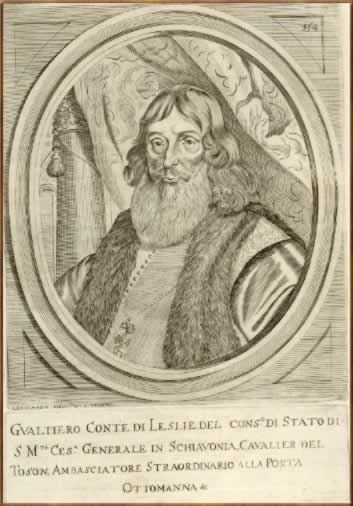
Count Walter Leslie (Fetternear House, Aberdeenshire, 1607 – Vienna, 4 March 1667) was a Scottish soldier and diplomat. He gained the positions of Imperial Field Marshal, Count of the Holy Roman Empire, Governor on the Croatian-Slavonian Military Frontier, Imperial Ambassador to Naples, Rome in 1645 and to Constantinople in 1665–1666.
Artist: Leonardo
Date:
Size 16 x 25 cms
Price £28.00
Ref:1537

George Oliver Walsh, Count of Wallis 1671-1743, was a field marshal of Irish descent in the service of the Holy Roman Empire and the Kingdom of the Two Sicilies and last regent of the Habsburg Kingdom of Serbia (1738–1739). Born into an exiled Irish family, he distinguished himself in Sicily by his capture of Messina. He then commanded on the Rhine (1733), then in Italy and Hungary. He lost the decisive Battle of Grocka against the Ottoman Empire in 1739, thus leading to the peace of Belgrade, which was unfavorable to Austria and thus led to his disgrace.
Size 9 x 14.5 cms
Price £14.00
Ref:1492