Page 39 of 262
1 33 34 35 36 37 38 39 40 41 42 43 44 45 262

Charles Howard, 1st Earl of Nottingham 1536-1624 Lord High Admiral

Charles Howard was Elizabeth I’s cousin and enjoyed her friendship and confidence. Appointed Lord High Admiral in 1585, he held chief command against the Spanish Armada. He was created Earl of Nottingham in 1601 following the success of the Cadiz expedition, which he jointly led with Robert Devereux, 2nd Earl of Essex. He subsequently acted as a commissioner at Essex’s trial in 1601. He retained royal favour under James I and led an embassy to Spain in 1604 to ratify the peace treaty that ended the Anglo-Spanish war.

Artist: Jacobus Houbraken

Size 17 x 10 cms

Price £10.00


Ref:3081

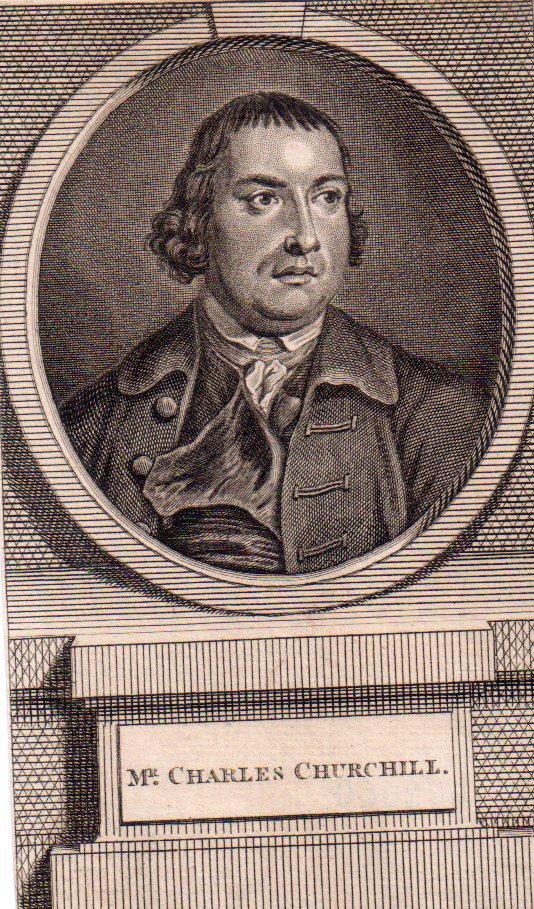
Charles Churchill 1731-1764

Author of The Rosciad, 1761, a satire on contemporary actors (only David Garrick escaped his vitriol). Churchill’s other targets included the Prime Minister, Lord Bute, the author, Tobias Smollett and the artist, William Hogarth. He died young on his way to visit his friend, John Wilkes, who was then living in exile in Paris.
Artist: J.S.C. Schaak

Size 15 x 10 cms

Price £10.00

Ref:3080

Sir Samuel Garth 1661-1719 physician and poet

Physician and poet. His attempts to establish a poor person’s dispensary were defeated when apothecaries raised the price of drugs; in retaliation he wrote his satiric poem, The Dispensary.
Artist: Sir Godfrey Kneller,

Size 15 x 10 cms

Price £10.00

Ref:3077

Sir Walter Ralegh 1552-1618


A poet, explorer, soldier, sailor, courtier and favourite of Elizabeth I, Ralegh was a true ‘Renaissance Man’. Much of his literary work is lost but about thirty short poems and various prose works survive, including The History of the World. He organised and financed a number of expeditions to North America, and in later life made several unsuccessful attempts to find gold in South America. Implicated in a plotting against James I, Ralegh spent much of the kings reign in the Tower. He was executed for treason in 1618.
Artist: Anthony Walker

Size 16 x 9 cms

Price £10.00

Ref:3074

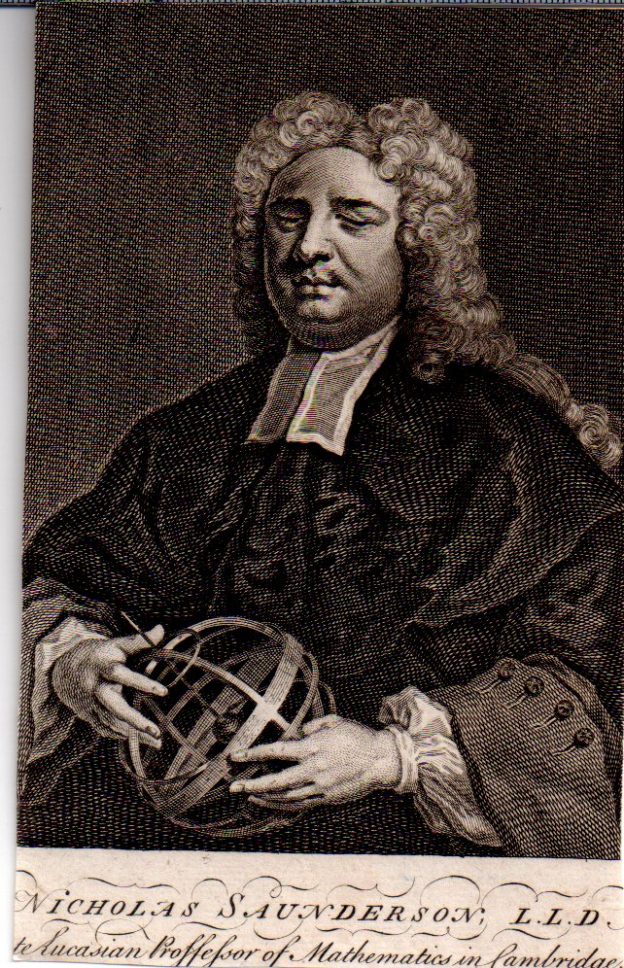
Nicholas Saunderson (or Sanderson) 1682-1739 mathematician

Saunderson went blind aged one year after he contracted smallpox. He taught mathematics, astronomy and optics at Cambridge University from 1707 and became Professor of Mathematics in 1712. He later worked closely with Halley and Flamsteed in their attempts to calculate longitude at sea, one of the major challenges of the eighteenth century.

Artist: John Vanderbank

Size 17 x 11 cms

Price £10.00

Ref:3073

This entry was posted in British on by .

John Hampden 1594-1643

Central figures at the start of the English Revolution. He entered Parliament as an MP in 1621, eight years before Charles I dissolved Parliament. Ship Money was a tax sometimes levied on coastal towns in wartime to pay for ships to protect the country from invasion. Charles, no longer receiving money from Parliament, in 1635 extended the Ship Money tax to include inland towns and counties. This attempt to create a new form of taxation without parliamentary sanction was resisted by Hampden, who refused to pay the levy. The king was unable to collect Ship Money, and was forced to recall Parliament in 1640. Hampden was one of the five MPs selected by Charles I for impeachment in 1642.

Artist: Jacobus Houbraken

Size 16 x 10 cms

Price £10.00

Ref:3071

Page 39 of 262
1 33 34 35 36 37 38 39 40 41 42 43 44 45 262